Foundation movement, temperature changes, moisture damage, poor construction, or natural settlement usually cause cracked walls in UK homes. In Wolverhampton, older housing stock and the area’s historic coal-mining legacy add additional risk factors that homeowners must be aware of. Most hairline cracks are harmless. But some cracks signal serious structural problems that need fast action.
Common causes at a glance:
- Foundation movement and subsidence
- Thermal expansion and contraction
- Damp and moisture damage
- Poor workmanship or materials
- Natural settlement in newer builds
- Structural stress from changes to the building
- Environmental factors like tree roots and traffic vibration
Worried about cracks in your Wolverhampton home? Book a professional wall survey today before small problems become expensive ones.
Quick Answer: Top Causes of Cracked Walls
Most wall cracks in UK homes fall into one of these categories:
Foundation movement is the most serious cause and often produces diagonal or stair-step cracks. Thermal movement creates vertical cracks that open and close with the seasons. Moisture and damp weaken materials over time. Poor construction causes early cracking that worsens without repair. Settlement is common in newer homes and usually stabilises within a few years.
If your crack is wider than 5mm, growing, or diagonal, treat it as urgent.
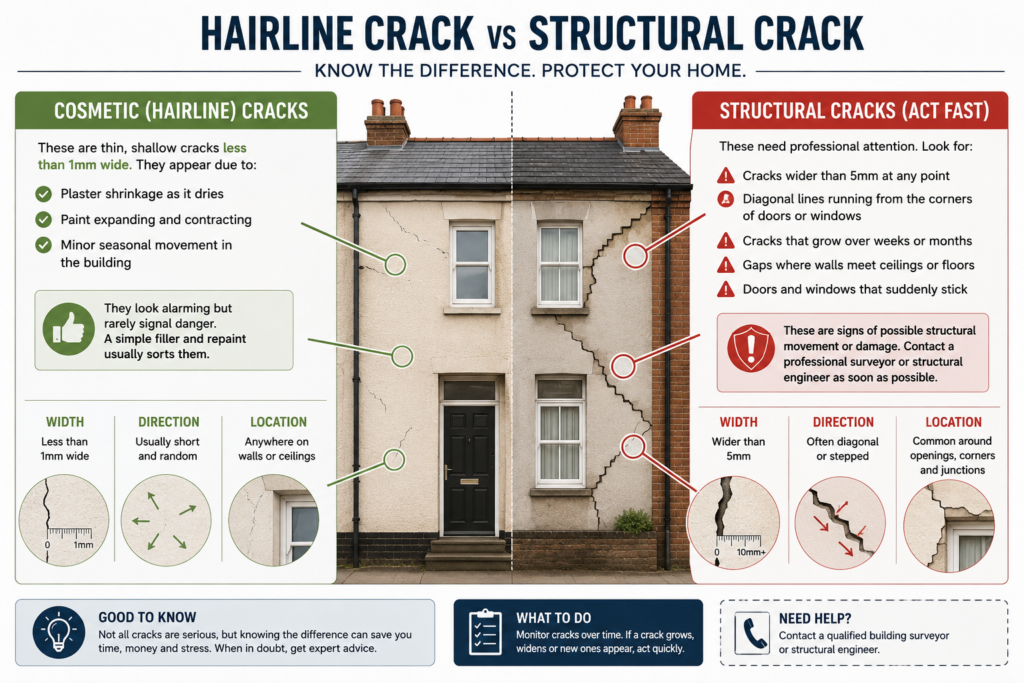
Cosmetic Cracks vs Structural Cracks: Know the Difference
Not every crack means trouble. The first step is knowing what you are dealing with.
Cosmetic (Hairline) Cracks
These are thin, shallow cracks less than 1mm wide. They appear due to:
- Plaster shrinkage as it dries
- Paint expanding and contracting
- Minor seasonal movement in the building
They look alarming but rarely signal danger. A simple filler and repaint usually sorts them.
Structural Cracks (Act Fast)
These need professional attention. Look for:
- Cracks wider than 5mm at any point
- Diagonal lines running from the corners of doors or windows
- Cracks that grow over weeks or months
- Gaps where walls meet ceilings or floors
- Doors and windows that suddenly stick
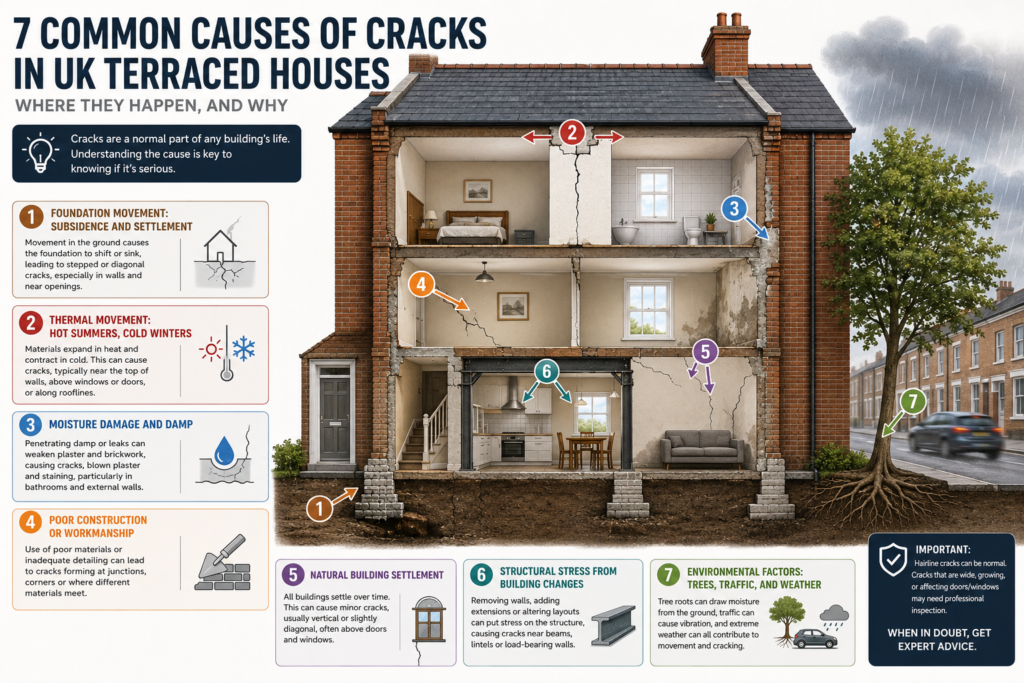
7 Main Causes of Cracked Walls in Wolverhampton Homes
1. Foundation Movement: Subsidence and Settlement
This is the most serious cause of cracked walls in UK homes. Subsidence happens when the support provided by the ground beneath a building is no longer sufficient to hold the building’s weight, causing part or all of the foundations to sink. When only a section of the building is affected, this creates shearing forces within the structure that lead to large cracks in the walls.
In Wolverhampton, this risk is amplified by a specific local factor. Wolverhampton sits within the South Staffordshire Coalfield, where coal has been extracted since at least the 1300s. Shallow mine workings, abandoned shafts, and mine entries exist beneath parts of Bilston, Ettingshall, Wednesfield, and areas toward Sedgley. Subsidence from these old workings can cause cracking in walls, uneven floors, and sticking doors.
This is a crucial detail for local homeowners. You should ask your conveyancer to order a Coal Authority mining search if you are buying a property in the area.
2. Thermal Movement: Hot Summers, Cold Winters
UK weather puts walls under constant stress. Materials expand in summer heat and contract in winter cold. This cycle pulls and pushes wall surfaces, especially at joints between different materials.
Thermal movement causes vertical cracks in walls, usually with a constant width. These might open and close throughout the year as temperature, humidity, and moisture levels change.
These cracks are common around window and door frames where different materials meet. They are usually cosmetic but worth monitoring.
3. Moisture Damage and Damp
Water is one of the most destructive forces inside a wall. Moisture weakens plaster, mortar, and brickwork from the inside out. In winter, water trapped inside wall materials freezes. Ice expands and pushes cracks wider. When it thaws, the cycle repeats.
Poor guttering, leaking roofs, rising damp, and condensation all contribute to this problem. Wolverhampton’s wet winters make moisture-related cracking a genuine local concern.
Check gutters, downpipes, and roof flashings regularly. Catching a leak early can prevent thousands in repair costs.
4. Poor Construction or Workmanship
Weak mortar mixes, inadequate foundations, missing reinforcement, and rushed builds all show up as cracks later. This type of cracking often appears within the first few years of a property being built or extended.
Poor workmanship is not always obvious at first. But over time, corners cut during construction create long-term structural problems. If you notice rapid cracking in a recently built or renovated property, poor workmanship may be the cause.
5. Natural Building Settlement
Settlement usually occurs within the first 10 years after a house or extension is built. As the structure and ground adjust to each other, minor cracking is completely normal.
Settlement cracks are typically small and stable. They do not grow significantly over time. Semi-detached homes dominate Wolverhampton’s housing stock, reflecting the city’s interwar suburban expansion. Many of these homes settled decades ago, but newer extensions or builds in the area may still be settling.
6. Structural Stress from Building Changes
Knocking down internal walls, adding extensions, converting lofts, or removing load-bearing structures all change how weight is distributed throughout your home. If this work is not done correctly, it creates uneven load distribution. This leads to cracks in unexpected places, sometimes far from where the work was done.
Always use a structural engineer when making changes to load-bearing parts of your home.
7. Environmental Factors: Trees, Traffic, and Weather
Tree roots draw moisture from the soil during dry spells. As the soil dries out and shrinks, it can pull away from your foundations. The top cause of subsidence, soil shrinkage, is due to the cohesive nature of clay soil, which expands and contracts as its moisture content rises or falls. If the soil is dehydrated by tree roots seeking new sources of water, the soil will shrink and, if it is underneath foundations, the foundations and the building above will sink into the ground.
The Midlands, East, and South East of England are at higher risk due to their clay-rich soils, which are more prone to subsidence.
Heavy traffic and nearby construction vibrations can also loosen mortar and open existing cracks over time. This is worth considering if you live near a main road or a development site.
Types of Wall Cracks and What They Mean
Understanding crack patterns helps you judge severity fast.
Vertical Cracks
Usually caused by thermal movement or natural settlement. Tend to be even in width. Low risk if narrow and stable.
Diagonal Cracks
Subsidence cracks are quite distinctive. They are diagonal and are usually wider at the top than the bottom, and wider than the edge of a pound coin. These are high-risk cracks. Get a surveyor involved.
Horizontal Cracks
Often caused by lateral pressure pushing against the wall. It can indicate wall failure or serious structural stress. Always treat as urgent.
Stair-Step Cracks in Brickwork
If a crack runs in a staircase pattern across and up a wall, it is normally caused by subsidence or settlement, which shifts the foundations. Wall tie failure can also produce this pattern.
| Crack Type | Likely Cause | Risk Level |
| Vertical, fine | Thermal or settlement | Low |
| Diagonal, widening | Subsidence | High |
| Horizontal | Structural pressure | High |
| Stair-step in brickwork | Foundation movement | High |
| Cracks around windows | Lintel movement or thermal | Medium |
What Causes Cracks Around Windows and Doors?
Windows and doors are stress concentration points. The wall carries extra load around each opening, and different materials meet at the frames. Cracks here are often caused by:
- Lintel failure or corrosion above the opening
- Thermal expansion where timber or metal meets brickwork
- Foundation movement transfers stress to the corners of openings
If doors or windows stick and show visible cracking, this is a serious warning sign. Do not ignore it.
Are Cracks in Walls Dangerous?
Most hairline cracks are not dangerous. They are a normal part of how UK homes age and breathe through seasonal changes.
Cracks become dangerous when they:
- Exceed 5mm in width at any point
- They are diagonal and wider at the top
- Continue to grow when monitored over time
- Appear alongside sticking doors, sloping floors, or gaps at ceiling junctions
When you notice issues such as windows and doors sticking in their frames, or a crack has significantly grown since you first spotted it, you may need to seek expert help.
A useful DIY monitoring method is to mark each end of a crack with a pencil line and date it. Check again in four to six weeks. If the crack has grown past your marks, call a professional.
Wolverhampton-Specific Causes You Need to Know
Wolverhampton homeowners face risks that differ from those in many other parts of the UK. Understanding these local factors could save you significant money.
Historic coal mining. The Coal Authority has paid out over £400,000 for subsidence claims across the Black Country and Staffordshire in recent years. If your home sits above old mine workings, subsidence risk is elevated. A mining search through your conveyancer costs around £40 and is essential.
Older housing stock. Much of Wolverhampton’s housing was built in the interwar period. These properties often have shallow foundations by modern standards, making them more vulnerable to ground movement.
Clay-rich Midlands soil. The Midlands is identified as a higher-risk area for subsidence based on its clay-rich soil, which is more prone to shrinking and swelling. Hot, dry summers cause the clay to contract and pull away from foundations. Wet winters cause it to expand again. This repeated movement stresses walls year on year.
Wet weather cycles. Wolverhampton receives significant annual rainfall. Freeze-thaw cycles during the winter months widen cracks season by season.
If you own an older home in Wolverhampton, a periodic structural survey is a smart investment, not just a cost.
When Should You Worry About Wall Cracks?
Act quickly if you notice any of the following:
- A crack that is wider than 5mm at any point
- A diagonal crack that is wider at the top than the bottom
- Any crack that grows visibly over a period of weeks
- Stair-step cracks running through brickwork or mortar joints
- Doors or windows that have started sticking without any clear reason
- Gaps appearing between walls, ceilings, or floors
If two or more of these signs appear together, book a structural survey without delay.
How to Prevent Cracks in Walls
Prevention is always cheaper than repair. Here are practical steps every Wolverhampton homeowner can take:
- Keep gutters, downpipes, and drains clear and free-flowing
- Plant trees and large shrubs well away from your house footprint
- Check external brickwork and mortar joints each year and repoint as needed
- Install or maintain a proper damp-proof course
- Make sure any building work is carried out by qualified tradespeople
- Get a RICS home survey before buying any older Wolverhampton property
Small maintenance tasks done regularly will help you avoid large repair bills later.
Need a trusted local surveyor? Browse our recommended Wolverhampton property professionals here.
How Much Does Wall Crack Repair Cost in Wolverhampton?
Repair costs vary widely based on the cause, severity, and location of the crack. Here are realistic 2025 and 2026 estimates for UK homeowners.
| Type of Repair | Estimated Cost (UK) |
| Cosmetic hairline cracks | £150 to £450 per crack |
| Minor structural repairs | £500 to £2,000 |
| Crack stitching (brickwork) | £2,000 to £6,000 |
| Underpinning or subsidence | £2,000 to £50,000+ |
Wall crack repair costs in the UK typically range from £150 to £5,000 or more, depending on the size, location, and cause of the cracking. Hairline cracks are usually inexpensive to repair, whereas wide or structural cracks caused by subsidence or movement can significantly increase costs.
Structural repairs often start at £1,000 and can reach £10,000 or more, depending on the severity.
Always address the root cause first. Filling a crack without fixing what caused it means the crack will return.
Conclusion
Cracked walls are a common feature of UK homes, especially in Wolverhampton, where older housing stock, historic mine workings, and Midlands clay soil create unique risks. Most cracks are harmless and cosmetic. But diagonal, wide, or growing cracks deserve fast professional attention.
Do not ignore warning signs. A wall survey now costs a fraction of what a structural repair will cost if problems are left to worsen.
Ready to get peace of mind? Contact our recommended Wolverhampton surveyors for a professional wall inspection today. Early diagnosis always saves money.
FAQs
What is the main cause of cracks in walls?
Foundation movement and thermal expansion are the two most common causes of wall cracks in UK homes. In Wolverhampton, historic coal mine workings beneath parts of the city also increase the risk of ground movement. Most hairline cracks are harmless, but diagonal cracks wider than the edge of a pound coin require professional assessment.
Are wall cracks normal in UK homes?
Yes. Minor hairline cracks are very common in UK properties, particularly in older housing stock. Seasonal temperature changes and natural settlement both cause small cracks to appear. They become a concern when they are wide, growing, diagonal, or accompanied by sticking doors and uneven floors.
Do cracks in walls always mean subsidence?
No. Most wall cracks are caused by thermal movement, moisture, or natural settlement rather than subsidence. However, diagonal cracks that are wider at the top than the bottom are a classic sign of subsidence and should be checked by a chartered surveyor as soon as possible.
When should I call a professional about wall cracks?
Call a professional if a crack is wider than 5mm, if it is growing, if it runs diagonally from a window or door corner, or if you notice other signs such as sticking doors, sloping floors, or gaps at ceiling junctions. Early action avoids far more expensive repairs later.
Can wall cracks be permanently fixed?
Yes, in most cases. Permanent repair depends on correctly identifying and resolving the root cause first, whether that is improving drainage, removing a problematic tree, or underpinning foundations. Once the cause is addressed, the crack can be repaired and should not return.