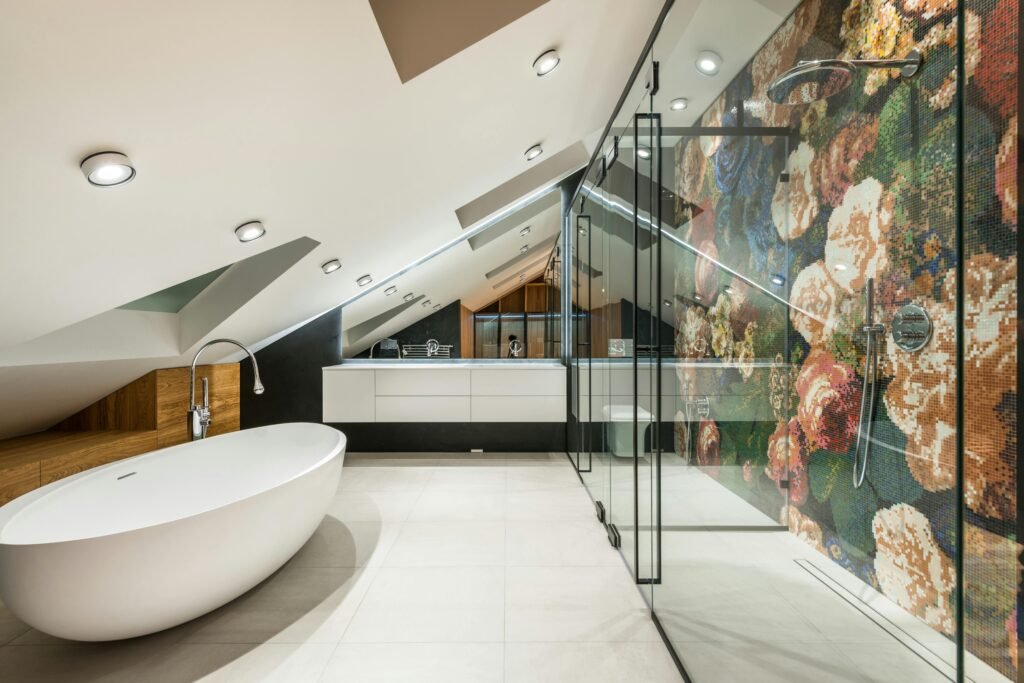
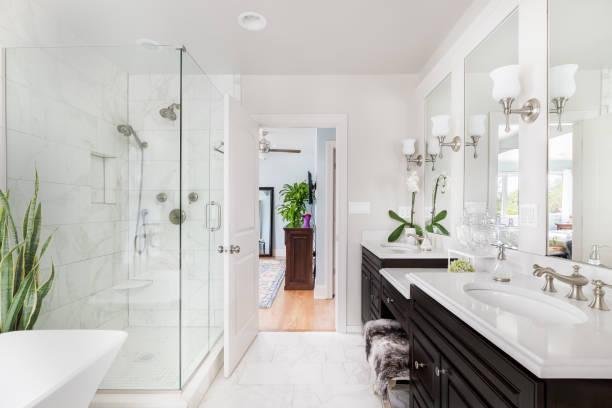
A walk-in shower suits modern style, small bathrooms, and easy access needs. A bathtub is better for families with young children, regular soakers, and protecting resale value in family homes. For one-bathroom UK properties, keeping at least one bath is usually the safer choice for resale. The best option depends on your space, lifestyle, and the duration of your stay in your home.
- Walk-in showers start from 800mm x 800mm, saving up to 46% of floor space compared to a standard bath.
- Standard bath installation costs £800 to £2,500; walk-in shower installation averages £2,800 for a bath-to-shower conversion.
- A typical bath uses 80 litters of water; a four-minute shower uses just 31 litters.
- 47% of UK buyers prefer a combo bath and shower unit (YouGov).
- Homes with at least one bath tend to sell faster in family-centric markets (Zoopla).
👉 Planning a full upgrade? Contact our detailed Bathroom Renovation experts for layout, cost, and planning guidance.
What Is a Walk-In Shower?
A walk-in shower is a shower enclosure you can step into without climbing over a high threshold. They range from frameless glass enclosures to fully tiled wet rooms. In UK homes, sizes typically start at 800mm x 800mm for compact bathrooms and extend to 1,700mm and beyond for larger, spa-style layouts. The three main types you will find in UK bathrooms are:
- Enclosed walk-in shower: A tray-and-screen setup. Affordable, practical, and the most common choice for standard UK bathrooms.
- Wet room: No tray or barriers are provided. The entire floor is waterproofed (tanked). More expensive to install, but extremely accessible and stylish. A wet room conversion typically costs £1,500 to £2,000 more than a standard walk-in shower.
- Curb less (level-access) shower: A seamless floor entry, ideal for wheelchair users and those with mobility challenges.
{[IMAGE PLACEHOLDER: Side-by-side photos of a frameless walk-in shower and a modern wet room in a UK bathroom. Suggested alt text: “walk-in shower vs wet room UK bathroom comparison”
What Is a Bathtub?
A bathtub is a fixed basin designed for full-body soaking. UK homeowners can choose from several types:
- Standard straight bath: The most common type. Fits almost any bathroom. Typically 1,700mm x 700mm.
- Shower bath (L-shape or P-shape): Wider at one end to accommodate a shower head. A smart space-saving hybrid solution for smaller UK bathrooms.
- Freestanding bath: A bold design statement. Works best in larger bathrooms. Often made from acrylic, cast iron, or stone resin.
- Walk-in bath: Has a door for step-free entry. Designed for elderly users and those with limited mobility. Supply and installation costs typically range from £2,000 to £8,000 or more.
Walk-In Shower vs Bathtub: Side-by-Side Comparison

| Factor | Walk-In Shower | Bathtub |
| Minimum Space (UK) | From 800mm x 800mm (0.64m²) | 1,700mm x 700mm (1.19m²) |
| Installation Cost | £1,500 to £7,500 (standard setup) | £800 to £2,500 (standard bath) |
| Water Usage | 31 to 62 litters (4 to 8 min shower) | ~80 litters per bath |
| Cleaning and Maintenance | Glass screens need regular de-scaling | Larger surface, easier to wipe down |
| Accessibility | Excellent, especially with level-access | Poor for elderly or mobility-impaired users |
| Family Suitability | Great for adults and teenagers | Essential for young children |
| Resale Value | Strong for modern and accessible homes | Essential in one-bathroom family homes |
| Modern Aesthetic | Very high, frameless glass trend strong | Freestanding baths also very on-trend |
Which Works Better in Small UK Bathrooms?
Space is one of the biggest decisions driving the walk-in shower vs bathtub debate in the UK. Research by Victoria Plum shows that a standard walk-in shower starts at just 0.64m² compared to 1.19m² for a standard bath, a floor space saving of around 46%. In a Victorian terrace bathroom, a compact en-suite, or a loft conversion where every centimeter counts, that difference is enormous.
Which Works Better in Small UK Bathrooms?
Space is one of the biggest decisions driving the walk-in shower vs bathtub debate in the UK. Research by Victoria Plum shows that a standard walk-in shower starts at just 0.64m² compared to 1.19m² for a standard bath, a floor space saving of around 46%. In a Victorian terrace bathroom, a compact en-suite, or a loft conversion where every centimeter counts, that difference is enormous.
Minimum Space Requirements (UK Building Norms)
UK building regulations do not specify a minimum bathroom size, but practical guidance from bathroom professionals points to these minimums:
- Walk-in shower (enclosed): 800mm x 800mm minimum
- Walk-in shower (comfortable use): 900mm x 900mm or 1,000mm x 1,000mm
- Standard bathtub: 1,700mm x 700mm
- Shower bath (L-shape): 1,700mm x 750mm (wider at the shower end)
Can You Replace a Bath in a One-Bathroom Home?
This is the single most important question for UK homeowners. If your property has only one bathroom, removing the bath entirely carries a real risk of reducing your buyer pool when you come to sell. The Plumbing Superstore points out that there is no definitive proof of a significant value drop between a bath and a shower, but the safest strategy is to keep at least one bath accessible somewhere in a one-bathroom home. If you have a second bathroom or an en-suite, you have far more freedom to go shower-only in one room.

Cost Comparison in the UK (2026 Estimates)
Walk-In Shower Installation Cost
According to data from Mouquet, the average cost of replacing a bath with a walk-in shower in the UK is around £2,800. A more detailed breakdown for a standard enclosed walk-in shower installation typically looks like this:
| Component | Estimated Cost (UK 2026) |
| Shower tray (acrylic or stone resin) | £100 to £500 |
| Glass screen or enclosure | £130 to £1,000 |
| Shower unit (electric or mixer) | £80 to £600 |
| Tiling and waterproofing | £300 to £1,200 |
| Labor (plumber and tiler) | £500 to £2,000 |
| Plumbing modifications | £300 to £2,000 |
| Total (standard setup) | £1,500 to £7,500 |
For accessible and mobility-focused walk-in showers (level-access trays, carer doors, grab rails), specialist installers quote from £5,000 to £8,500 or more. A full wet room conversion typically costs £1,500 to £2,000 more than an equivalent enclosed shower.
Bathtub Installation Cost
According to Happy Bathrooms and data from the Devon Daily, the average cost of installing a standard bathtub in the UK in 2025 to 2026 ranges from £800 to £2,500, with premium options like cast iron freestanding baths reaching £5,000 or more. Here is a cost breakdown:
| Bath Type | Supply and Fit Estimate (2026) |
| Standard acrylic bath | £800 to £1,500 |
| Shower bath (L or P-shape) | £1,000 to £2,500 |
| Freestanding acrylic bath | £1,500 to £3,000 |
| Cast iron or stone resin freestanding | £3,000 to £5,000+ |
| Tiling around the bath | £200 to £800 |
| Labor (removal, plumbing, installation) | £250 to £1,500 |
Plumbers in the UK typically charge £30 to £50 per hour, with London and South East rates running 15 to 25% higher than the rest of the country.
Ongoing Costs: Water and Heating
Data from the Plumbing Superstore makes the running cost difference clear. A standard bath uses around 80 liters of hot water. An eight-minute shower uses around 62 liters. A disciplined four-minute shower uses just 31 liters, which is less than 40% of what a bath uses. Over a year, those savings add up significantly on your water and energy bills. If you are on a water meter, this alone can make a walk-in shower the smarter long-term choice for a household of adults.
Does Removing a Bath Reduce Property Value in the UK?
This is the question most UK homeowners wrestle with. The research gives a nuanced answer. Zoopla’s housing market analysis shows that homes with at least one bath tend to sell faster, especially in family-centric areas. A survey cited by Beams Renovation found that 47% of UK buyers prefer a combination bath and shower unit, while only 4% say they bathe regularly compared to 76% who primarily shower. The gap between what people prefer when buying and what they actually use day-to-day is striking.
Research from Absolute Mobility found that 84% of buyers would offer more money for a modernised or recently refurbished bathroom, and 94% would offer more for a property with an en-suite. This tells you that quality matters more than the specific fixture you choose.
When a Walk-In Shower Adds Value
- In properties with two or more bathrooms where a bath is retained elsewhere
- En-suites, where buyers typically expect a shower rather than a bath
- Homes in areas popular with older buyers, professionals, or downsizers
- When the installation is professionally done, and the finish is clearly high quality.
When Keeping a Bath Is Essential
- In one-bathroom homes, especially in family-centric neighbourhoods
- In Victorian terraces, semis, and three-bedroom family houses, where buyers with children are the target market
- When planning to sell within five years, the buyer demographics skew towards families.
Key Rule: Never remove the only bath in your home without adding a shower bath or a second bathroom solution elsewhere. If you have two bathrooms, you have far more freedom to go shower-only in one room.
Which Option Is Right for Your Lifestyle?
Best for Families with Young Children
A bathtub wins here without question. Bathing small children safely, quickly, and without mess requires a bath. Most parents with children under the age of seven consider a bath non-negotiable. If your family falls into this category, keep the bath. A shower bath with a good over-bath shower is the ideal compromise if you also want shower functionality in a compact space.
Best for Busy Professionals
A walk-in shower is the clear winner. When 76% of UK adults prefer a quick shower to a bath (YouGov), it makes sense for busy households to prioritise a spacious, well-designed walk-in shower. A larger shower enclosure (900mm x 1,200mm or more) with a quality rainfall head can transform a daily routine into something genuinely enjoyable.
Best for the Elderly and Mobility Needs
A walk-in shower with a level-access tray and grab rails is the safest option for older adults or anyone with limited mobility. Stepping over a bath rim is one of the most common causes of bathroom falls in the UK. A curb less walk-in shower eliminates that risk entirely. If soaking is important, a walk-in bath (with a door entry) is the accessible bathing alternative.
Best for Luxury Bathroom Renovations
Both can deliver a genuinely luxurious result. A large frameless walk-in shower with a rainfall head, body jets, and premium tiling creates a spa-like experience. A freestanding statement bath, particularly in cast iron or stone resin, brings a classic elegance that showers simply cannot replicate. For a true luxury bathroom, having both is the ultimate goal where space permits.
Safety, Accessibility, and Ageing in Place
Bathroom safety is a serious concern in UK homes. A level-access or low-threshold walk-in shower significantly reduces the risk of slips and falls. Key features to look for include:
- Anti-slip shower trays or textured floor tiles
- Grab rails positioned at a comfortable height (typically 700mm to 900mm from the floor)
- A fold-down shower seat for those who need to sit while bathing
- A thermostatic shower valve to prevent scalding (UK Building Regulations require hot water not to exceed 48°C)
- Wide shower enclosures (minimum 900mm x 900mm) for ease of movement and carer access
If you are considering a full wet room for accessibility reasons, the Disabled Facilities Grant (DFG) in England covers up to £30,000 for eligible individuals. Note that waiting lists can be long (often six to twelve months or more), so private funding is a faster route for those with the means.
Which Is Easier to Clean?
Cleaning is a practical factor that rarely gets enough attention in bathroom planning. Here is an honest breakdown:
| Cleaning Task | Walk-In Shower | Bathtub |
| Glass screen maintenance | Needs regular squeegee and de-scaling spray | Not applicable |
| Grout lines | More grout if fully tiled; needs regular attention | Similar if tiled surround |
| Limescale (hard water areas) | Glass screens show limescale quickly | Less visible on acrylic surfaces |
| General surface wiping | Smaller enclosed area, quicker to clean | Larger surface, more scrubbing needed |
| Mould risk | High if poorly ventilated | Similar, especially around the plug and seal |
If you live in a hard water area (London, the South East, and much of central England), limescale on glass shower screens is the biggest ongoing challenge for walk-in showers. A daily squeegee after each use and a weekly de-scaling spray will keep a glass screen looking good. Wall panels (instead of tiles) can significantly reduce grout cleaning effort in both showers and around baths.
Modern Bathroom Design Trends in the UK (2026)
UK bathroom design in 2026 is being shaped by a clear direction: clean lines, natural materials, and spa-style comfort at home. The key trends are:
- Frameless walk-in showers and wet rooms: The single biggest trend in UK bathroom renovations. Frameless glass enclosures create a spacious, light-filled bathroom even in smaller spaces.
- Freestanding baths: Freestanding models, particularly in matte acrylic or stone resin, have surged in popularity over the past decade and remain a statement piece in larger UK bathrooms.
- Neutral and earthy tones: Warm beige, terracotta, sage green, and slate grey are replacing stark white in UK bathroom design.
- Rainfall showerheads: A high-ceiling or ceiling-mounted rainfall head transforms a standard walk-in shower into a genuinely luxurious experience.
- Smart showers: Digital and voice-controlled shower systems with programmable temperature memory are growing in UK homes, though they add to installation costs.

Can You Have Both? Shower Baths and Smart Layouts
For many UK homeowners, the real answer to the walk-in shower vs bathtub question is: neither one nor the other, but a clever combination. If space and budget allow, there are several ways to get the best of both worlds:
- L-shaped or P-shaped shower baths: These baths have a wider section at one end to create a proper showering area. They fit in a standard bath footprint and cost from around £1,000 to £2,500 to supply and install. They are probably the most practical solution for a one-bathroom UK home.
- Over-bath rainfall shower: Adding a quality mixer shower with a large rainfall head above a standard bath creates a genuinely enjoyable shower experience without losing the bath. Cost is low (often £200 to £600 for the shower unit), and the installation is straightforward.
- Separate shower enclosure alongside a bath: In larger UK bathrooms (typically 5m² or more), a separate walk-in shower alongside a standard or freestanding bath is the premium solution. This is increasingly common in master bathrooms and family bathrooms in four and five-bedroom homes.
For more inspiration on making the most of a small bathroom, visit our guide on small bathroom ideas for UK homes.
Walk-In Shower vs Bathtub: 7 Questions to Ask Before You Decide
Before you commit to a bathroom renovation, work through these seven questions. Your answers will point you clearly towards the right choice.
- Is this your only bathroom? If yes, strongly consider keeping a bath (or a shower bath) to protect resale value and buyer appeal.
- Do you have young children? If yes, a bath is practically essential for the next few years. A shower bath gives you both options.
- How long will you stay in the property? If you plan to stay ten-plus years, design for your lifestyle. If you are selling within three to five years, design for your target buyer.
- Is mobility a concern? If you or someone in your household has limited mobility, a level-access walk-in shower is likely the safest and most practical choice.
- How much space do you realistically have? Measure your bathroom before you decide. A walk-in shower in a 0.64m² minimum footprint opens up options that a bath simply does not.
- Are you renovating for resale? If your target buyer is a family, keep the bath. If your area attracts professionals, downsizers, or older buyers, a high-quality walk-in shower may actually be the stronger selling point.
- What is your true daily usage? If only 4% of UK adults bathe regularly (YouGov), honestly ask yourself when you last used your bath. If the answer is months ago, a walk-in shower will improve your daily life far more than a bathtub you never use.
Final Verdict: Shower or Bath?
There is no single right answer to the walk-in shower vs bathtub debate for UK homes in 2026, but there is a clear framework to make the decision confidently.
- Choose a walk-in shower if: you are a busy professional, your home has a second bathroom, you want to future-proof for accessibility, or your bathroom is too small to comfortably fit a standard bath.
- Keep or install a bathtub if: you have young children, yours is the only bathroom in the property, or your target buyer is a family. An L-shaped shower bath gives you both options without compromise.
- Go for both if you have the space, the budget, and a bathroom larger than 5m². A quality walk-in shower alongside a freestanding or standard bath is the ideal result for any UK home in 2026.
Whatever you decide, the quality of finish matters more than the specific fixture. A professionally installed, well-designed bathroom will add more value to your home than a budget solution of any kind.
Frequently Asked Questions
Is it a bad idea to remove a bathtub in a UK home?
It depends on your property. In a one-bathroom home, removing the only bath can reduce buyer appeal, particularly for families with young children. Zoopla data shows homes with at least one bath tend to sell faster in family markets. In a home with two bathrooms or an en-suite, removing a bath from one room is far less likely to cause issues. The Plumbing Superstore notes there is no definitive proof of a significant value drop either way, so context is everything.
Do walk-in showers add value to UK property?
Yes, in the right context. A high-quality walk-in shower or wet room in a modernized bathroom can increase property value by 4 to 5%, according to multiple UK industry sources. Absolute Mobility found that 84% of buyers would offer more for a recently refurbished bathroom. The key is the quality of finish rather than the specific choice of shower or bath.
What are the disadvantages of a walk-in shower?
Walk-in showers can be cold if your bathroom is not well-heated or insulated. Glass screens require regular cleaning to prevent limescale, especially in hard water areas across much of England. They are not suitable for bathing young children. And in a one-bathroom home, removing a bath entirely to install a shower-only space may narrow your buyer pool when you sell.
Which uses more water, a bath or a shower?
A standard UK bath uses approximately 80 litres of water. An eight-minute shower uses around 62 litres. A four-minute shower uses only around 31 litres, less than 40% of a full bath. For households on a water meter or looking to reduce bills, showering regularly rather than bathing is the most effective single change you can make in the bathroom.
Are walk-in showers colder than baths?
Walk-in showers can feel cooler than baths because water contacts the body for a shorter time, and the surrounding air is not warmed by the water mass in the same way. In a poorly insulated or under-heated bathroom, this is noticeable. Good bathroom ventilation, underfloor heating, and a thermostatic shower valve (which maintains a consistent water temperature) will all significantly improve the warmth and comfort of a walk-in shower.