Keep Your Tiles Looking Flawless All Year Round
Proper tile maintenance is not just about looks. It protects your investment, keeps your home hygienic, and prevents costly repairs down the line. For Wolverhampton homeowners, the UK’s damp winters, hard water, and unpredictable weather make tile care even more important.
Here is what a solid tile maintenance routine covers:
- Daily sweeping to remove grit and debris.
- Weekly mopping with a pH-neutral cleaner
- Monthly deep cleaning of grout lines
- Annual sealing of natural stone and grout
Whether you have ceramic floors in your kitchen or porcelain tiles in your bathroom, this tile maintenance guide gives you everything you need to keep them looking their best.
Ready to give your tiles the care they deserve? Book a free tile consultation with Best Hommes today.
Understanding Your Tiles: Why Type Matters
Before you clean a single tile, you need to know what you are working with. Different tile materials have very different needs.
Common Tile Types in Wolverhampton Homes
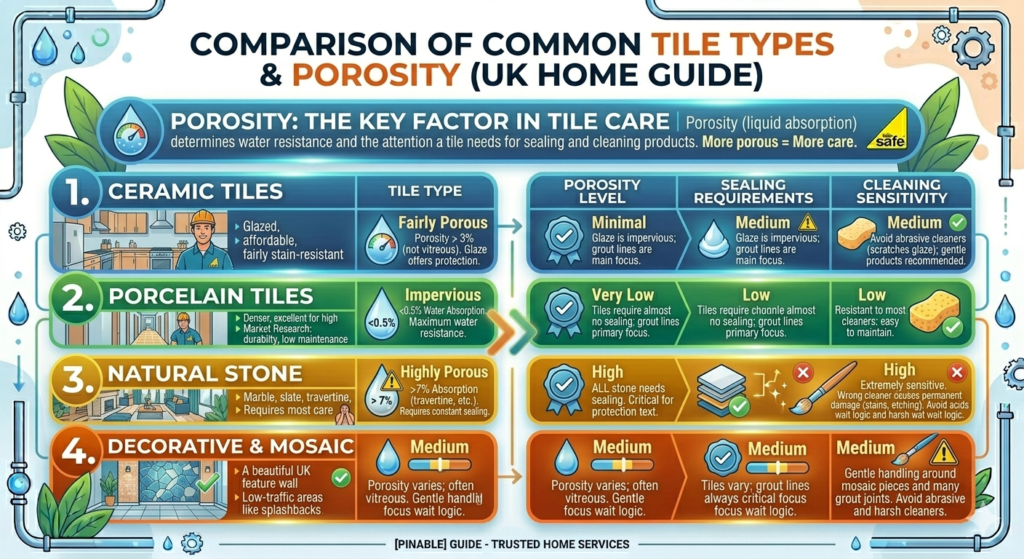
Ceramic tiles are the most common in UK kitchens and bathrooms. They are glazed, affordable, and fairly stain-resistant. However, the glaze can be scratched by abrasive cleaners.
Porcelain tiles are denser and more water-resistant than ceramic tiles. According to Expert Market Research, porcelain and ceramic tiles are highly favoured in the UK for their durability and low maintenance requirements. Porcelain is an excellent choice for high-traffic areas.
Natural stone tiles (marble, slate, travertine, limestone) look stunning but require the most care. All natural stone tiles require sealing in order to protect them. Using the wrong cleaner on stone can cause permanent damage.
Decorative and mosaic tiles are often found in feature walls or splashbacks. They are generally low-traffic but require gentle handling around grout joints.
Porosity: The Key Factor in Tile Care
Porosity determines how much liquid a tile absorbs. Impervious tiles with water absorption below 0.5% offer maximum water resistance, while non-vitreous tiles with absorption above 7% are highly porous and not suitable for wet environments.
The more porous a tile is, the more attention it needs when it comes to sealing and cleaning products.
Daily and Weekly Tile Cleaning Routine
A consistent routine is the single best thing you can do for your tiles. The good news? It takes just a few minutes a day.
Daily Tile Care (5 Minutes)
The primary goal of daily tile maintenance is simple: remove abrasive particles before they can scratch or damage your flooring.
Here is what to do every day:
- Sweep or vacuum loose dirt and debris with a soft-bristled broom or microfibre dust mop.
- Wipe up spills immediately, especially on porous tiles like marble or limestone.
- Use a soft floor attachment on your vacuum to avoid accidental scratching.
Weekly Tile Care (15 to 20 Minutes)
Routine care involves daily sweeping and periodic mopping using warm water and pH-neutral cleaning solutions. These practices prevent dirt accumulation and maintain the tile’s original appearance without risking surface damage.
Your weekly routine should include:
- Dry sweep the entire tiled area first
- Mix a pH-neutral cleaner with warm water.
- Mop using a microfibre mop, working in sections.
- Rinse thoroughly to prevent residue build-up.
- Allow to air dry or use a dry cloth to finish.
Common Mistakes to Avoid
- Using vinegar or lemon-based cleaners on natural stone (the acid etches the surface)
- Scrubbing with wire brushes or abrasive pads
- Leaving standing water on grout lines
- Using bleach regularly on coloured grout (it fades the pigment)
You can also explore our guide on choosing the right flooring for your home to see how tiles compare to other surfaces.
Deep Cleaning and Grout Care
Grout is porous by nature. It absorbs dirt, moisture, and mould spores faster than the tile itself. In the West Midlands, where humidity can be persistent, grout discoloration is one of the most common issues homeowners face.
Why Grout Needs Monthly Attention
Grout maintenance prevents moisture penetration and bacterial growth. Clean grout joints with a soft brush and mild detergent. For deeper cleaning, use a grout-specific cleaner designed for cementitious or epoxy grout.
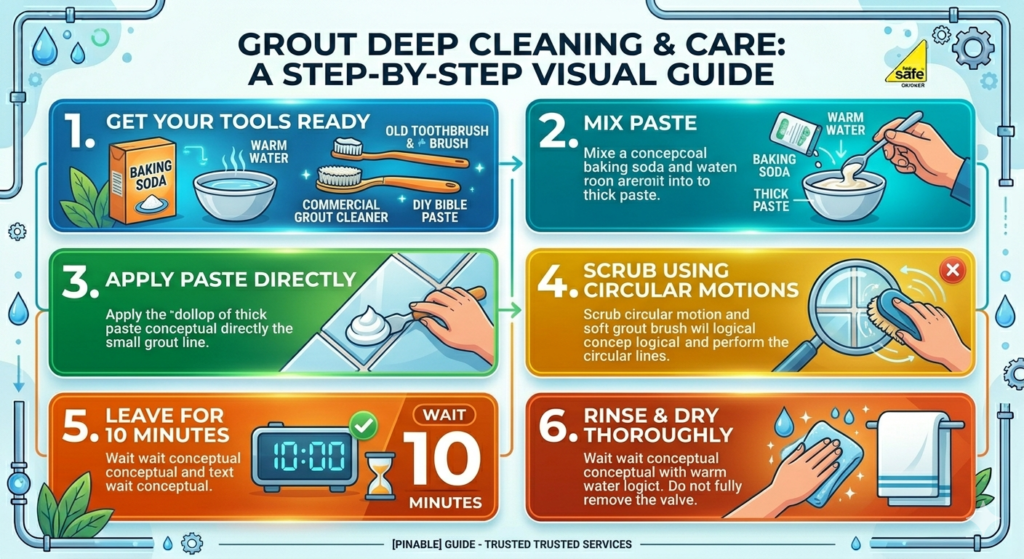
Monthly Deep Clean Method
What you need:
- Baking soda
- Warm water
- An old toothbrush or grout brush
- A grout-specific cleaner (for stubborn stains)
Steps:
- Mix baking soda and warm water into a thick paste.
- Apply paste directly to grout lines.
- Scrub using circular motions with a soft brush.
- Leave for 10 minutes.
- Rinse with warm water and dry thoroughly.
For heavily stained grout, a commercial grout cleaner designed for UK bathrooms will be more effective than a DIY paste. Always test on a small area first.
Steam Cleaning: Use With Caution
Steam cleaning can be effective, but only if your tiles and grout are sealed first. Unsealed grout can absorb excess moisture, worsening staining or mould growth over time.
Tile Sealing Guide: What You Need to Know
Sealing is one of the most overlooked parts of tile maintenance. Get it right, and your tiles will stay cleaner, longer.
Which Tiles Need Sealing?
| Tile Type | Needs Sealing? | Frequency |
| Natural stone (marble, slate, travertine) | Yes, always | Once or twice a year |
| Terracotta and quarry stone | Yes | After installation and annually |
| Polished porcelain | Yes (before and after grouting) | Every 1 to 2 years |
| Glazed ceramic | Tile: no. Grout: yes | Grout every 12 to 24 months |
| Unglazed porcelain | Recommended | Every 1 to 2 years |
| Epoxy grout | No | Not required |
Sealing tiles and grout reduces the materials’ porosity and protects the tiled surface, increasing its resistance to dirt, spills, staining, and general wear.
How to Seal Grout: Step-by-Step
- Clean all grout lines thoroughly and allow to dry completely (at least 24 hours)
- Choose a penetrating sealer for bathrooms and wet areas.
- Apply sealer along grout lines using a small brush or applicator bottle.
- Leave for the manufacturer’s recommended dwell time (usually 5 to 10 minutes)
- Wipe away any excess sealer from tile surfaces immediately.
- Allow 24 hours for full cure before using the area.
Most clear sealers will be ready for surface traffic within two hours after the final coat. The sealer should achieve full cure in 24 hours, providing your tile and grout with resistance to water, oil, and acid-based contaminants.
The Water Droplet Test
Not sure if your grout needs resealing? Place a few drops of water on the grout line. If the water beads up, the seal is still working. If the water has soaked in or left a darker shade on the grout line, then it has either not been sealed or needs to be prepared and resealed.
How Often Should You Reseal?
High-traffic shower and floor grout should be sealed every 6 months to 1 year. Guest bath and shower grout can be sealed every one to two years, depending on frequency of use.
Low-traffic areas, such as decorative backsplashes, may only need attention every two to three years.
Stain Removal and Common Tile Problems
Even well-maintained tiles pick up stains. Knowing how to treat them quickly makes all the difference.
Typical Stains in Wolverhampton Homes
| Stain Type | Tile Type Affected | Best Treatment |
| Hard water marks | Ceramic, porcelain | Diluted white vinegar (not on stone) |
| Coffee or wine | Ceramic, porcelain | Mild detergent and warm water |
| Grease | Kitchen tiles | Isopropyl alcohol, then rinse |
| Mould on grout | All types | Baking soda paste or grout cleaner |
| Rust stains | Natural stone | Stone-safe rust remover only |
Important: Never use acidic cleaners, such as undiluted vinegar or citrus-based products, on natural stone. They cause etching that is permanent.
Fixing Minor Tile Damage
Hairline cracks: These can be filled with color-matched epoxy resin. Clean the area first, apply resin, and smooth flush with the tile surface.
Loose tiles: Press the tile firmly. If it does not re-adhere, you will need to remove it, apply fresh tile adhesive, reset it, and re-grout once cured.
Crumbling grout: Rake out the old grout to a depth of 2-3mm using a grout rake. Apply fresh grout, smooth, and seal after 72 hours.
For significant damage, it is always worth getting a professional opinion before attempting a DIY fix. See our article on when to repair vs replace your tiles for more details.
Outdoor Tile Maintenance for Patios and Pathways
Outdoor tiles face far more punishment than indoor ones. Frost, algae, and moss are particular challenges in Wolverhampton’s climate.
Key Outdoor Tile Care Habits
- Sweep outdoor tiles at least twice a week to prevent moss and algae from taking hold.
- Rinse with water and a gentle pH-neutral detergent, not a high-pressure washer (too close causes grout erosion)
- Inspect for cracked tiles before winter sets in, as water can enter cracks and freeze, causing tiles to lift
Outdoor tiles require regular maintenance, including daily sweeping, seasonal inspections for damage, and cleaning with mild, pH-neutral detergents to preserve their appearance and functionality.
Outdoor Tile Material Choice Matters
Porcelain tiles account for over 60% of the UK ceramic tile market due to their superior durability, making them an excellent choice for outdoor applications. If you are planning an outdoor tile project in Wolverhampton, porcelain is almost always the right choice for longevity.
UK Seasonal Tile Maintenance Checklist
Tiles need different attention at different times of the year. Here is a simple checklist to follow across the seasons.
Spring
- Deep clean and reseal all grout lines
- Inspect outdoor tile spaces for frost damage.
- Check for any cracked or loose tiles after winter.
Summer
- Keep up your weekly cleaning routine.
- Place mats at entrances to reduce grit being tracked in
- Check bathroom ventilation to prevent humidity-related mould.
Autumn
- Clear leaf debris from outdoor tiles weekly
- Seal outdoor tiles and grout before cold weather arrives.
- Check grout for any cracks before the first frost.
Winter
- Never use salt de-icers on outdoor tiles (they damage grout and weaken tile surfaces)
- Use sand or specialist non-salt alternatives for icy outdoor areas.
- Stick to UK-safe, pH-neutral cleaners for all tile surfaces.
Eco-Friendly Tile Cleaning Options
More Wolverhampton homeowners are looking for greener cleaning solutions. Good news: some of the most effective tile cleaners are also the most eco-friendly.
Baking soda is a gentle abrasive that cleans grout without harmful chemicals. Mix with water into a paste and scrub with a soft brush.
pH-neutral plant-based cleaners are widely available and safe for all tile types, including natural stone. Look for products with no VOCs (volatile organic compounds).
Microfibre mops reduce water consumption significantly compared to traditional string mops, and they pick up more bacteria without additional chemicals.
Research from the British Ceramic Confederation shows that over 70% of UK-produced tiles now incorporate recycled materials, aligning with national sustainability objectives in modern construction. Choosing sustainable care products is a natural extension of that commitment.
When to Call a Professional in Wolverhampton
Sometimes a tile problem is beyond a weekend’s worth of DIY. Here is when to bring in a professional tile specialist in the West Midlands:
- Grout is deeply stained and does not respond to cleaning.
- Tiles are lifting or cracking across a larger area.
- You need full outdoor tile sealing for a patio or pathway.
- Natural stone has lost its finish or shows etching.
- Mould is persistent despite regular cleaning (could indicate moisture behind tiles)
Professional tile restoration services in Wolverhampton and across the West Midlands can often restore tiles to near-original condition without the need for full replacement, saving you a high cost.
Contact Best Hommes for a professional tile assessment in Wolverhampton.
Long-Term Tile Care Plan: Your Summary Schedule
| Frequency | Task |
| Daily | Sweep or vacuum, wipe up spills immediately |
| Weekly | Mop with pH-neutral cleaner and warm water |
| Monthly | Deep clean grout with baking soda paste or specialist cleaner |
| Every 6 to 12 months | Reseal high-traffic and wet area grout |
| Annually | Full tile inspection, reseal natural stone, check outdoor tiles |
Bookmark this guide and set calendar reminders for your monthly and annual tasks. Consistency is the key to tiles that last decades rather than years.
Frequently Asked Questions
Do I need to seal my tile floors in the UK?
It depends on your tile type. All natural stone tiles require sealing. Glazed ceramic tiles do not need sealing, but their grout does. Polished porcelain benefits from sealing before and after grouting. Always seal grout in wet areas like bathrooms and kitchens to prevent staining and mould.
How often should bathroom tiles be cleaned?
You should scrub bathroom grout lightly every week as part of your routine cleaning. A deep clean with baking soda paste or a specialist grout cleaner is recommended once a month. In high-humidity bathrooms, checking for mould weekly and addressing it immediately prevents it from spreading through grout lines.
Can vinegar damage porcelain tiles?
Diluted vinegar is generally safe for occasional use on glazed porcelain tiles. However, it should never be used on natural stone tiles such as marble, travertine, or limestone. The acidity etches and permanently dulls the surface. Always use a pH-neutral cleaner as your primary tile cleaning solution.
What are the best tile maintenance products for Wolverhampton homes?
Look for pH-neutral floor cleaners, penetrating grout sealers, and microfibre mops. Brands such as HG, LTP, and Fila are widely respected in the UK tile trade and are suitable for ceramic, porcelain, and stone tiles. Always check the product label to confirm it is suitable for your specific tile type before applying.
How do I stop moss from growing on my outdoor patio tiles?
Sweep outdoor tiles regularly to remove organic debris that feeds moss. Use a gentle outdoor tile cleaner in autumn before the wet season starts. Avoid high-pressure washing too close to grout lines, as this can erode the joints. Apply an outdoor grout sealer each autumn to create a protective barrier against moisture and organic growth over winter.