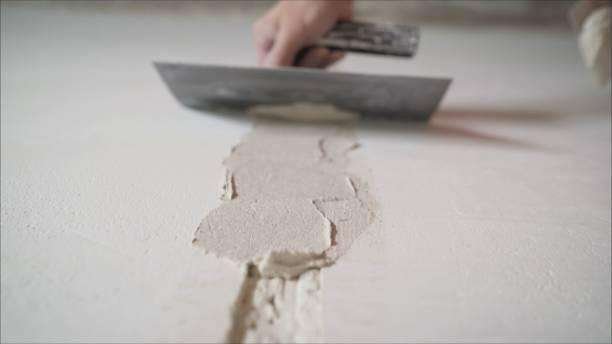
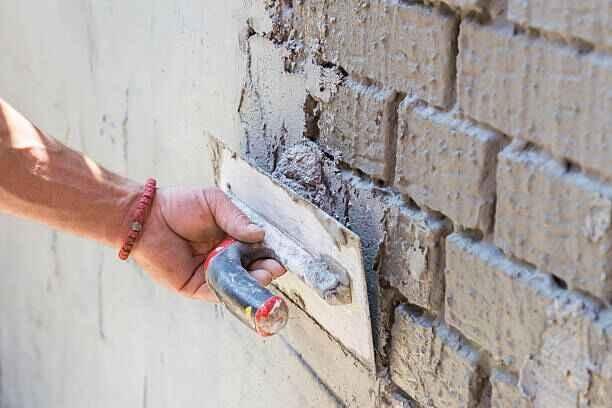
External rendering is a protective coating applied directly to the exterior walls of a property. It shields your home from weather damage, reduces heat loss, prevents damp, and instantly transforms how your property looks and feels.
For Wolverhampton homeowners, rendering is not just about aesthetics. The city receives around 812mm of rainfall annually, and its high rainfall throughout the year significantly elevates the risk of penetrating damp, especially in older housing stock. A quality render system addresses all of this in one job.
Key external rendering benefits at a glance:
- Weather and moisture protection
- Improved thermal efficiency and lower energy bills
- Higher property value and curb appeal
- Reduced maintenance over the long term
- Covers damaged or ageing brickwork
Ready to protect your home? Get a free rendering quote in Wolverhampton today.
What Is External Rendering?
External rendering is a mixture of materials applied in layers to the outside walls of a building. It creates a tough, weather-resistant surface that bonds directly to brick, block, or concrete.
Common render types include silicone, acrylic, cement, lime, and monocouche. Each has specific strengths depending on the property type, age, and the finish you want to achieve.
Rendering is used on everything from Victorian terraces and semi-detached homes to modern new builds and commercial units. It is one of the most cost-effective ways to improve, protect, and upgrade any property exterior.
Top 10 Benefits of External Rendering
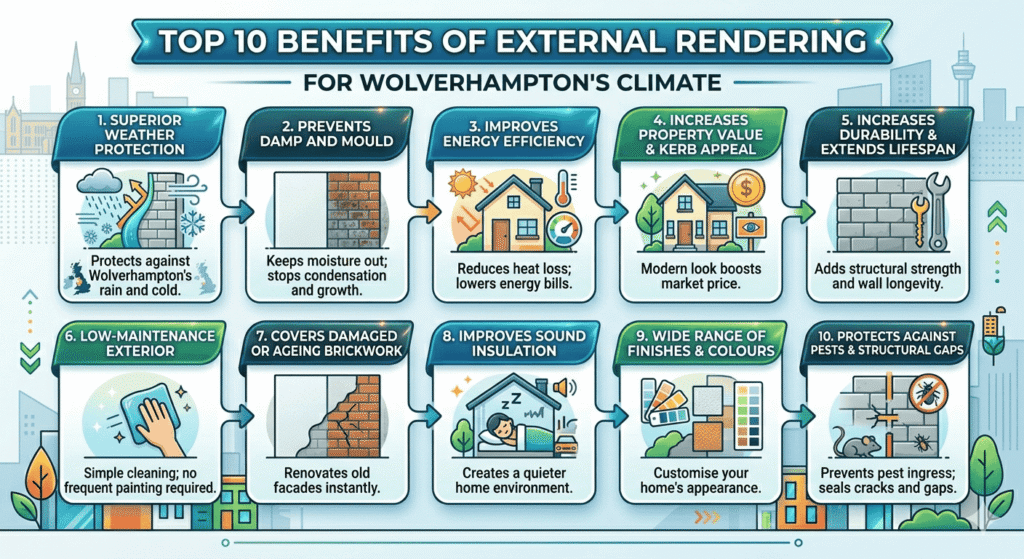
1. Superior Weather Protection for Wolverhampton’s Climate
Wolverhampton sits in the West Midlands and experiences rain throughout every season. Wind-driven rain, common in the UK, can force moisture into even small cracks and imperfections in the external fabric of buildings.
A properly applied render system seals the entire wall surface. It keeps water out, prevents frost damage in winter, and protects the structure from red wet-awet-and-dryes that cause brickwork to deteriorate over time.
2. Prevents Damp and Mould
The Midlands’ variable climate, with frequent rain, occasional snow, and sharp temperature shifts, places significant stress on homes, especially older properties.
Older Wolverhampton buildings are traditionally solid-wall built, making them inherently more susceptible to damp. A breathable render system, such as silicone or lime, allows trapped moisture to escape while blocking new water from entering. This significantly reduces penetrating damp, mould growth, and the resulting structural damage.
3. Improves Energy Efficiency and Reduces Bills
External wall insulation combined with render can reduce heat loss by up to 45%, lower energy bills, and improve EPC ratings.
Even standard rendering adds a layer of thermal resistance to your exterior walls. When combined with an external wall insulation (EWI) system, the savings are substantial. A typical 1960s semi-detached house can save £350 to £600 annually on heating bills with 100m lower energy bills and improve EPC ratings with EPS insulation.
With energy costs still elevated across the UK in 2026, this benefit alone makes a rendering investment worthwhile for most households in Wolverhampton.
4. Increases Property Value and Kerb Appeal
A freshly rendered home looks modern, clean, and well-maintained. This matters when it comes to selling or renting. External rendering typically adds 2 to 5% to a property’s value and helps properties sell 15 to 25% faster, according to estate agents. A £300,000 property could gain £6,000 to £15,000 in value from quality rendering.
The visual transformation is also immediate. Render is available in dozens of colours and textures, from smooth contemporary finishes to traditional textured looks that suit older Wolverhampton streetscapes.
5. Increases Durability and Extends Wall Lifespan
Unprotected brickwork gradually absorbs water, salts, and pollutants. Over the ears, this weakens mortar joints, causes spalling, and accelerates deterioration.
Rendering acts as a permanent barrier between your walls and the elements. It protects the building’s structural integrity and reduces the frequency and cost of external repairs over time. A good render job protects your walls for decades, not just years.
6. Low-Maintenance Exterior Solution
Unlike painted exteriors that need recoating every few years, modern renders require very little upkeep. Sand and cement render typically requires repainting every 5 to 8 years to maintain its appearance and weather resistance. Over 20 years, a homeowner might repaint two or three times, each time incurring the cost of scaffolding, paint, and labour.
Silicone and acrylic renders, by contrast, are through-coloured and often self-cleaning. They save you significant time and money over the years.
7. Covers Damaged or Ageing Brickwork
Many Wolverhampton properties have brickwork that is cracked, stained, or simply outdated in appearance. Rendering covers all of this cleanly and gives the exterior a completely fresh look without the need for full brickwork replacement.
This is especially useful for older terraced properties and post-war semis across the city, where the original exterior finish may have deteriorated significantly over decades. planning permission to render your house in Wolverhampton
8. Improves Sound Insulation
An added layer of dense render material on exterior walls helps to dampen external noise. This benefit is particularly useful for homes on busy roads or in densely populated areas of Wolverhampton, where traffic, road noise, and urban sound can affect everyday comfort.
While render is not a dedicated acoustic system, it does contribute to a quieter interior environment when applied at the correct depth.
9. Wide Range of Finishes and Colours
Rendering gives you full control over how your property looks. You can choose from smooth, textured, pebbledash, or scraped finishes. Colour options are extensive, covering both modern and traditional palettes.
This flexibility makes rendering suitable for all property types, from Victorian terraces in central Wolverhampton to modern detached homes in the suburbs. You can match the street’s style or create a distinctive look that stands out.
10. Protects Against Pests and Structural Gaps
Cracks in brickwork and mortar joints are entry points for moisture, insects, and small pests. Rendering seals these gaps across the entire wall surface, eliminating easy access points and reducing the risk of infestation or further structural deterioration.
This is a practical, low-profile benefit that many homeowners overlook but appreciate once the work is done.
External Rendering Benefits for Wolverhampton Homes Specifically
Wolverhampton presents a very specific case for rendering. The city has a mix of housing types, making the benefits especially relevant here.
Wolverhampton features a wide variety of properties, ranging from classic Georgian buildings in the city centre to numerous Victorian and Edwardian homes, as well as post-war semi-detached homes, terraced houses, and bungalows.
For Victorian and Edwardian terraces, lime render is often the best choice. It is breathable and compatible with older solid-wall construction, for post-war semis and detached homes, silicone or monocouche render offers a durable, low-maintenance finish with a clean, modern appearance.
The combination of an older housing stock and a wet regional climate makes Wolverhampton one of the most suitable areas in the Midlands for external rendering. Homeowners who delay often find that damage to brickwork and mortar becomes far more expensive to fix later.
Explore our external rendering services in Wolverhampton and request a free quote.
Types of External Rendering and Their Key Benefits
| Render Type | Best For | Lifespan | Maintenance |
| Silicone | Most properties | 25 to 30 years | Very low |
| Acrylic | Modern homes | 20 to 25 years | Low |
| Cement | Budget projects | 7 to 15 years | Medium |
| Lime | Older/historic buildings | 20 to 30 years | Low |
| Monocouche | One-coat finish | 20 to 25 years | Very low |
Silicone Render
Silicone render is the most popular choice in the UK in 2026. A properly installed silicone render system should last 20 to 25 years or more in UK conditions, and many manufacturers back their products with performance warranties of 20 years or longer. It is breathable, flexible, and highly resistant to cracking. Its hydrophobic surface repels water and is naturally self-cleaning in rain.
Acrylic Render
Acrylic render offers a smooth, modern finish with good flexibility. It is a cost-effective option for homeowners who want a contemporary look without the Premium price of silicone. It performs well on newer properties and is available in a wide range of colours.
Cement Render
Cement render is the traditional option. It is strong and affordable but requires regular painting and is prone to cracking over time. Cement renders can crack anywhere from 7 to 15 years, depending on the underlying conditions. It suits budget projects but has a higher long-term maintenance cost than modern alternatives.
Lime Render
Lime render is the correct choice for older Wolverhampton properties with solid walls. It is breathable, which means moisture can escape from the wall without causing damage. It is also more flexible than cement, reducing cracking. Lime render is known to last anywhere from 20 to 30 years and is a more eco-friendly option than some other types.
Monocouche Render
Monocoque is a single-coat system that combines color and protection in a single application. It eliminates the need for painting, saves onlabourr time, and delivers a consistent, through-colored finish. It is ideal for homeowners who want a clean, low-hassle result.
External Rendering vs Painting vs Cladding
| Feature | Rendering | Painting | Cladding |
| Durability | High | Low | High |
| Maintenance | Low | High | Medium |
| Damp protection | Yes | Partial | Yes |
| Thermal improvement | Yes | No | Yes |
| Upfront cost | Medium | Low | High |
| Lifespan | 20 to 30 years | 5 to 8 years | 20 to 40 years |
Rendering sits between painting and cladding in cost and sits above painting in almost every performance measure. It is the most practical all-round option for UK homeowners seeking durable protection without the high cost of full cladding installation.
Cost of External Rendering in Wolverhampton (2026)
External rendering costs in the UK typically range from £40 to £80 per m² for standard cement render, £55 to £90 per m² for monocouche render, and £70 to £120 per m² for silicone or acrylic renders.
For Wolverhampton, costs are generally in line with the Midlands average, which sits below London and South East rates. Labour is a key variable, and the condition of your existing walls will affect preparation costs.
Typical cost factors include:
- Property size and wall area in m²
- Render type selected
- Condition of existing brickwork or render
- Scaffolding requirements
- Access difficulty
For a standard three-bedroom semi-detached home in Wolverhampton, you can expect a total project cost of around £4,000 to £9,000, depending on the render system and prep work needed. Always get at least three written quotes before committing.
For properties with EWI (external wall insulation) included, a full EWI and render system typically costs anywhere between £7,000 and £25,000, depending on your home and the products chosen.
Is External Rendering Worth It?
Yes. External rendering is worth it for the vast majority of UK homeowners, particularly in Wolverhampton.
It protects your property from moisture and structural damage, improves thermal performance, reduces heating bills, and increases your home’s market value. A £300,000 property could gain £6,000 to £15,000 in value from quality rendering, which costs £6,000 to £8,000, delivering a positive return on investment alongside practical benefits.
When you add up the costs of regular repainting, damp repairs, and ongoing maintenance for an unrendered property, the long-term economics strongly favour rendering.
When Should You Render Your House?
Look out for these signs that your home needs rendering or re-rendering:
- Visible cracks in existing render or brickwork
- Damp patches appearing on internal walls
- Peeling or flaking exterior paint
- Persistent mould on external or internal walls
- An outdated or visually poor exterior
- Rising heating bills with no obvious cause
- Crumbling mortar joints or spalling brick faces
The sooner you act, the less expensive the repair. Minor surface issues caught early are far cheaper to address than structural damp or neglected, failed brickwork.
Common Rendering Mistakes to Avoid
Getting rendering right matters as much as the decision to render at all. These are the most common mistakes homeowners make.
Choosing the wrong render type. Using cement render on an older solid-wall property traps moisture and causes damage. Always match the render system to the property type.
Skipping surface preparation. Render applied over dirty, loose, or damp substrate will fail early. Proper preparation is essential for long-term performance.
Going with the cheapest contractor. Rendering is a skilled trade. A poorly applied job will fail within a few years, costing you far more to remove and redo than a quality installation would have cost in the first place.
Ignoring breathability. Older Wolverhampton properties need breathable render. Sealing them with a non-breathable cement coat traps moisture inside the wall, accelerating deterioration.
Final Verdict: External Rendering is a Smart Investment for Wolverhampton Homes
External rendering delivers real, lasting value for Wolverhampton homeowners. It protects against the region’s wet climate, eliminates the risk of damp in older properties, improves energy efficiency, and boosts property value, all in a single project.
Whether your home is a Victorian terrace, a post-war semi, or a modern detached property, there is a render system that suits your needs and your budget. The key is choosing the right product and a skilled, reputable local contractor.
Do not wait for cracks, damp, or ageing brickwork to become bigger problems. Act now and protect your home for the next 25 years.
Contact our Wolverhampton rendering team today for a free, no-obligation quote.
FAQs About External Rendering
How long does external rendering last in the UK?
Lifespan depends on the render type. Silicone render lasts 25 to 30 years, lime render lasts 20 to 30 years, and cement render can crack within 7 to 15 years, depending on conditions. Modern systems installed by qualified contractors consistently outperform older materials.
Does external rendering stop damp?
Rendering significantly reduces penetrating damp by sealing the exterior wall surface against rain and moisture. It is not a standalone damp-proofing solution, and any existing rising damp should be addressed separately. A breathable render will also allow internal moisture to escape rather than trapping it inside the wall.
Do I need planning permission to render my house in Wolverhampton?
In most cases, no. External rendering is considered permitted development for standard residential properties in the UK. However, if your property is listed or sits within a conservation area, you may need consent from Wolverhampton city Council before proceeding. Always check before starting work.
What is the best render type for older Wolverhampton properties?
Lime render is generally the best choice for Victorian and Edwardian solid-wall properties. It is breathable, flexible, and compatible with the original construction materials. For post-war cavity-wall homes, silicone or monocouche render is the better option.
Is silicone render worth the extra cost?
Yes, in most cases. Silicone render’s flexibility allows it to accommodate minor structural movement, and its long lifespan of 20 to 25 years or more means far fewer maintenance interventions than traditional cement alternatives. The higher upfront cost is offset by lower ongoing maintenance and better long-term performance.